
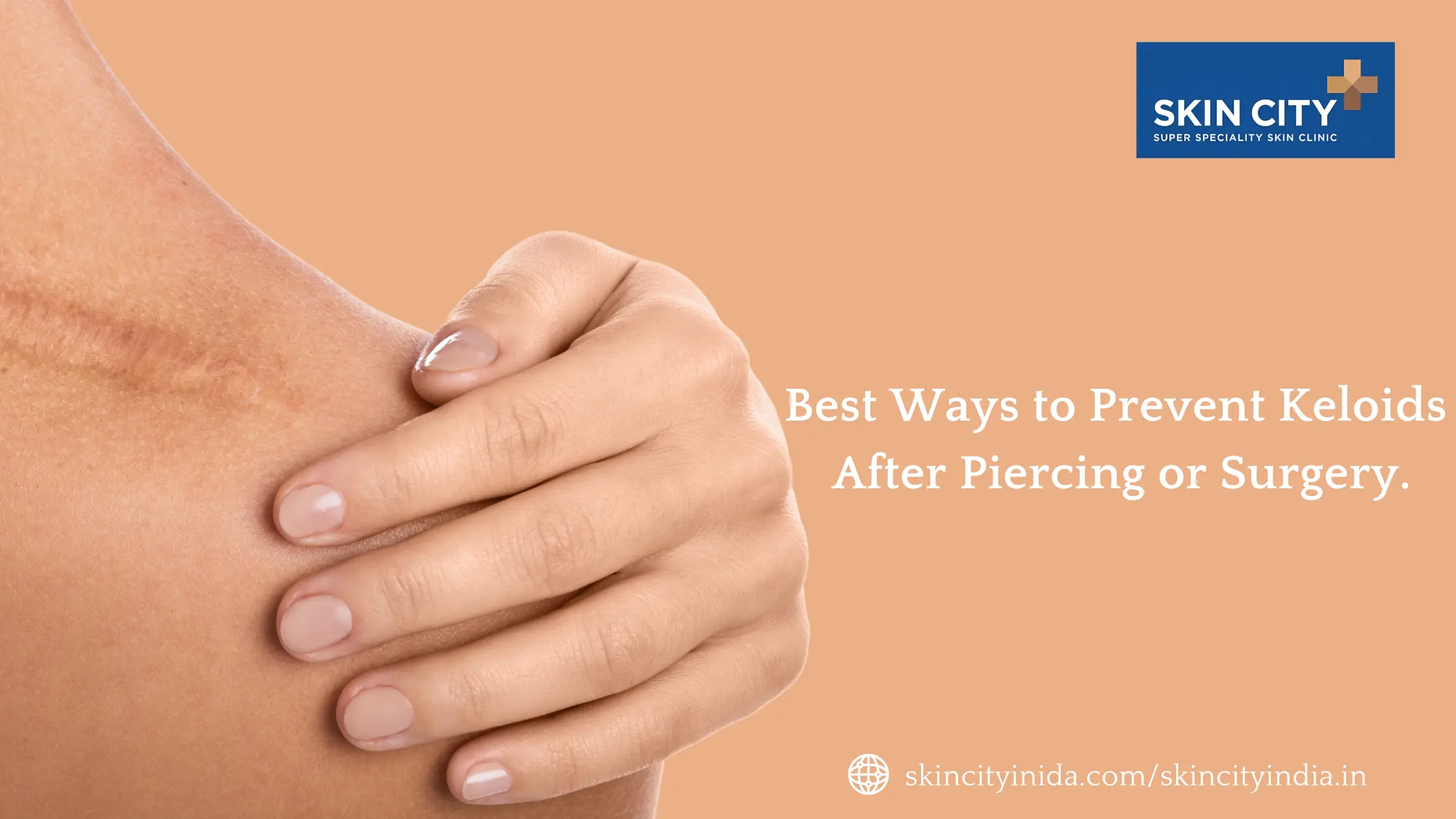
Best Ways to Prevent Keloids After Piercing or Surgery.
Introduction
Keloids are raised,
firm scars that grow excessively beyond the original wound. For some individuals,
especially those with a genetic predisposition or darker skin tones, even a minor skin
injury such as a piercing or surgical incision can trigger keloid formation. While
keloids are not harmful, they can be itchy, uncomfortable, and cosmetically distressing.
Fortunately, with the right preventive measures, you can significantly reduce your
chances of developing them. In this blog, we’ll explore how to prevent keloids after
body piercings or surgical procedures—expert-backed tips from the dermatology team at
Skincity India.
What Are Keloids and Who Is at Risk?
Keloids are abnormal scars caused by an overproduction of collagen during the healing
process. Unlike normal scars, keloids continue to grow even after the wound has
healed.
You may be at higher risk if:
You have a family history of keloids
You’re between ages 10–30
You have medium to dark skin
You’ve had keloids in the past
How to Prevent Keloids After Piercing
Choose the Right Piercing Studio:
Always get piercings done by licensed professionals using sterile techniques. Poor
hygiene during piercing increases inflammation and keloid risk.
Opt for Hypoallergenic Jewelry:
Use jewelry made from medical-grade titanium, gold, or surgical steel. Nickel-based
metals can irritate the skin and cause over-healing.
Clean Regularly, Gently:
Clean the area with saline solution twice daily. Avoid alcohol or hydrogen peroxide—they
can irritate and dry the skin.
Avoid Touching or Twisting
Keep your hands off the new piercing. Constant touching introduces bacteria and causes
trauma, which can lead to scarring.
Don’t Change Jewelry Prematurely:
Wait until the piercing has healed completely (often 6–8 weeks or more). Changing too
early can re-injure the skin and trigger keloid formation.
How to Prevent Keloids After Surgery
Follow Post-Surgical Instructions Carefully:
Follow your surgeon’s wound care routine. Keeping the wound clean, dry, and protected is
key.
Use Silicone Gel or Sheets:
Applying silicone-based products after the wound heals helps flatten scars and reduce
the risk of keloids. These are safe and dermatologist-recommended.
Avoid Sun Exposure:
UV rays can darken scars and stimulate abnormal healing. Always cover healing wounds or
use sunscreen.
Consider Pressure Therapy (for Surgical Scars):
For high-risk patients, wearing pressure garments over the healing wound can reduce scar
thickness and keloid chances.
Consult a Dermatologist Early:
If you’ve had keloids before, consult Skincity India before any surgery or piercing.
Preventive steroid injections or topical treatments may be recommended.
Conclusion
While keloids are hard to treat once fully formed, they are often preventable with the
right precautions. Whether you're planning a piercing or a minor surgery, being
proactive can help you avoid unwanted scarring. At Skincity India, we offer personalized
scar prevention protocols and early intervention strategies tailored to your skin type
and history.