
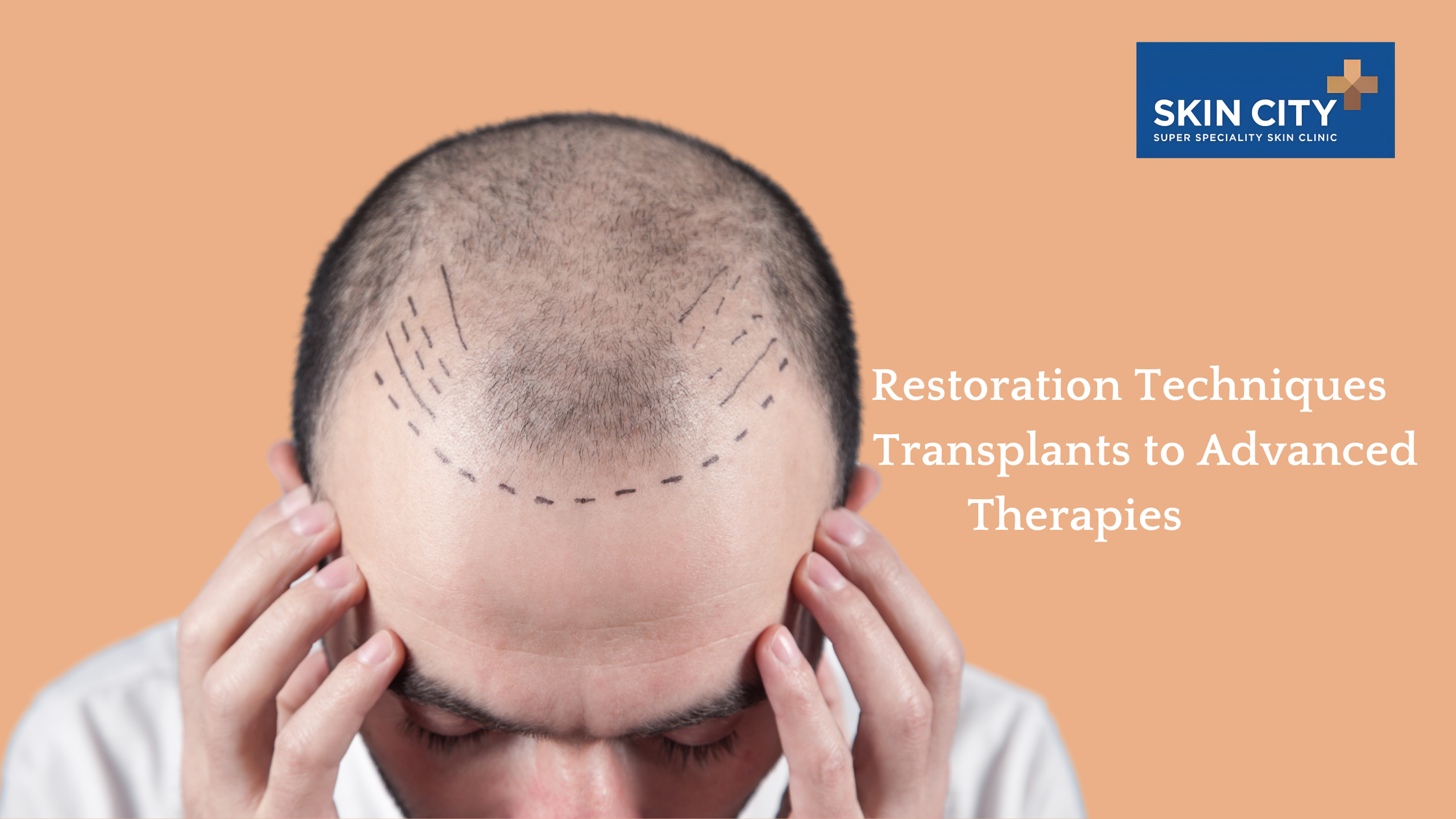
Hair Restoration Techniques: From Transplants to Advanced Therapies
Introduction
Hair loss is a common
concern affecting millions of people worldwide. Whether due to genetics, aging, hormonal
imbalances, or medical conditions, hair loss can impact self-confidence and overall
well-being. Fortunately, modern advancements in hair restoration offer multiple
solutions, ranging from traditional transplants to cutting-edge therapies. Let’s explore
the various techniques available today.
1. Hair Transplantation
Hair transplant surgery remains one of the most effective and permanent solutions for
hair restoration. There are two primary methods:
Follicular Unit Transplantation (FUT): A strip of hair-bearing skin is removed from the
donor area (usually the back of the scalp), and individual follicular units are
extracted and transplanted to the balding areas.
Follicular Unit Extraction (FUE): Individual hair follicles are harvested directly from
the donor site and implanted into the thinning areas. This technique leaves minimal
scarring and has a shorter recovery time compared to FUT.
2. Platelet-Rich Plasma (PRP) Therapy
PRP therapy is a non-surgical treatment that utilizes the body’s own platelets to
stimulate hair growth. A small amount of the patient’s blood is drawn, processed to
concentrate the platelets, and injected into the scalp. PRP helps improve blood
circulation and encourages hair follicle regeneration, making it an excellent option
for early-stage hair loss.
3. Low-Level Laser Therapy (LLLT)
LLLT is a non-invasive treatment that uses red light wavelengths to stimulate hair
follicles, increase blood flow, and promote hair growth. It can be administered through
laser combs, helmets, or in-clinic laser treatments. LLLT is most effective for
individuals experiencing mild to moderate hair loss.
4. Stem Cell Therapy
Stem cell therapy for hair restoration is an emerging technique that aims to regenerate
hair follicles using stem cells extracted from the patient’s own fat tissue or other
sources. While still in the experimental stages, early research suggests that stem cell
therapy could be a promising alternative for those seeking non-surgical options.
5. Scalp Micropigmentation (SMP)
SMP is a cosmetic procedure that involves the application of medical-grade tattoo
pigments to the scalp to create the illusion of a fuller head of hair. It is a great
option for individuals with extensive hair loss or those who prefer a closely shaved
look.
6. Medications for Hair Restoration
Two FDA-approved medications are commonly used to slow hair loss and promote
regrowth:
Minoxidil (Rogaine): A topical treatment applied directly to the scalp, Minoxidil helps
to prolong the growth phase of hair follicles.
Finasteride (Propecia): An oral medication that works by inhibiting the hormone
responsible for hair loss, finasteride is most effective for male pattern baldness.
Final Thoughts
Choosing the right hair restoration method depends on the severity of hair loss,
individual preferences, and medical history. Consulting a hair restoration specialist
can help determine the most suitable treatment plan. With continuous advancements in
technology, achieving a fuller, healthier head of hair is now more attainable than ever.