
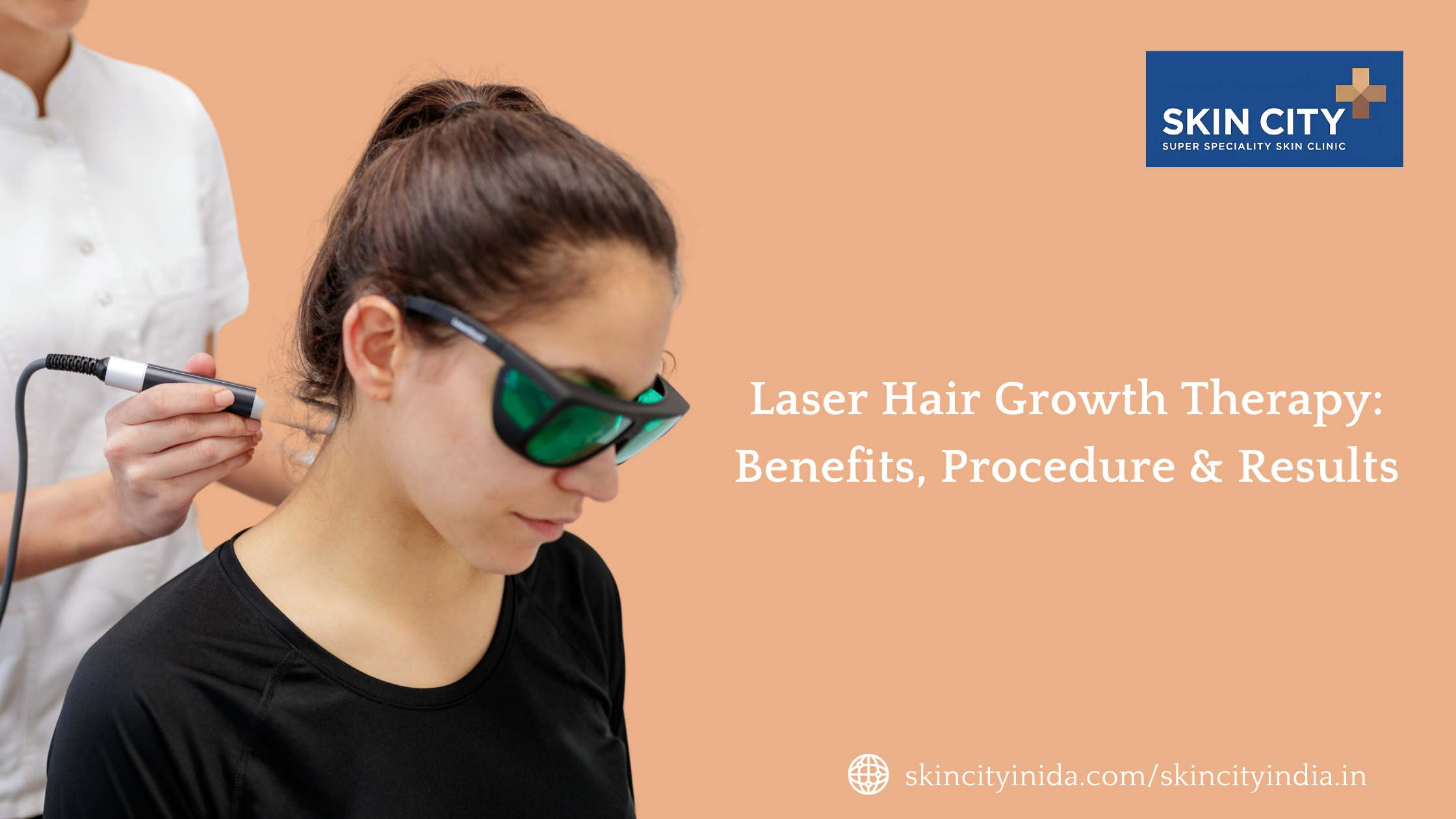
Laser Hair Growth Therapy: Benefits, Procedure & Results
Updated on August 20, 2025 • By Skincity Official
Hair loss can affect confidence at any age, but modern dermatology offers advanced, non-invasive solutions like Laser Hair Growth Therapy. Also known as Low-Level Laser Therapy (LLLT), this treatment is gaining popularity for its safe and effective approach to hair regrowth.
What is Laser Hair Growth Therapy?
Laser Hair Growth Therapy uses low-intensity laser light to stimulate hair follicles, improve blood circulation in the scalp, and promote new hair growth. It is a painless, non-surgical procedure suitable for both men and women experiencing hair thinning.
Procedure Explained
Step 1: Consultation
A dermatologist evaluates your scalp condition and identifies the cause of hair loss to determine if you are a suitable candidate.
Step 2: Laser Application
A specialized laser device is used over the scalp for about 15-30 minutes. The light penetrates the skin and stimulates inactive hair follicles.
Step 3: Regular Sessions
Typically, 2-3 sessions per week are recommended for a few months to achieve optimal results.
Step 4: Combination Approach
Doctors may combine this therapy with PRP, medications, or supplements to enhance effectiveness.
Benefits of Laser Hair Growth Therapy
Non-invasive and painless: No cuts, injections, or downtime - completely comfortable procedure.
Stimulates hair follicles: Activates weak or dormant follicles, encouraging new hair growth.
Improves blood circulation: Enhances oxygen and nutrient delivery to the scalp.
Reduces hair thinning: Strengthens existing hair strands and improves density.
Safe for men and women: Suitable for early-stage hair loss in all genders.
Quick sessions, no downtime: You can resume daily activities immediately after each session.
Expected Results
Reduction in hair fall within a few weeks.
Noticeable improvement in hair thickness in 2-3 months.
Best results when combined with other dermatologist-recommended treatments.