
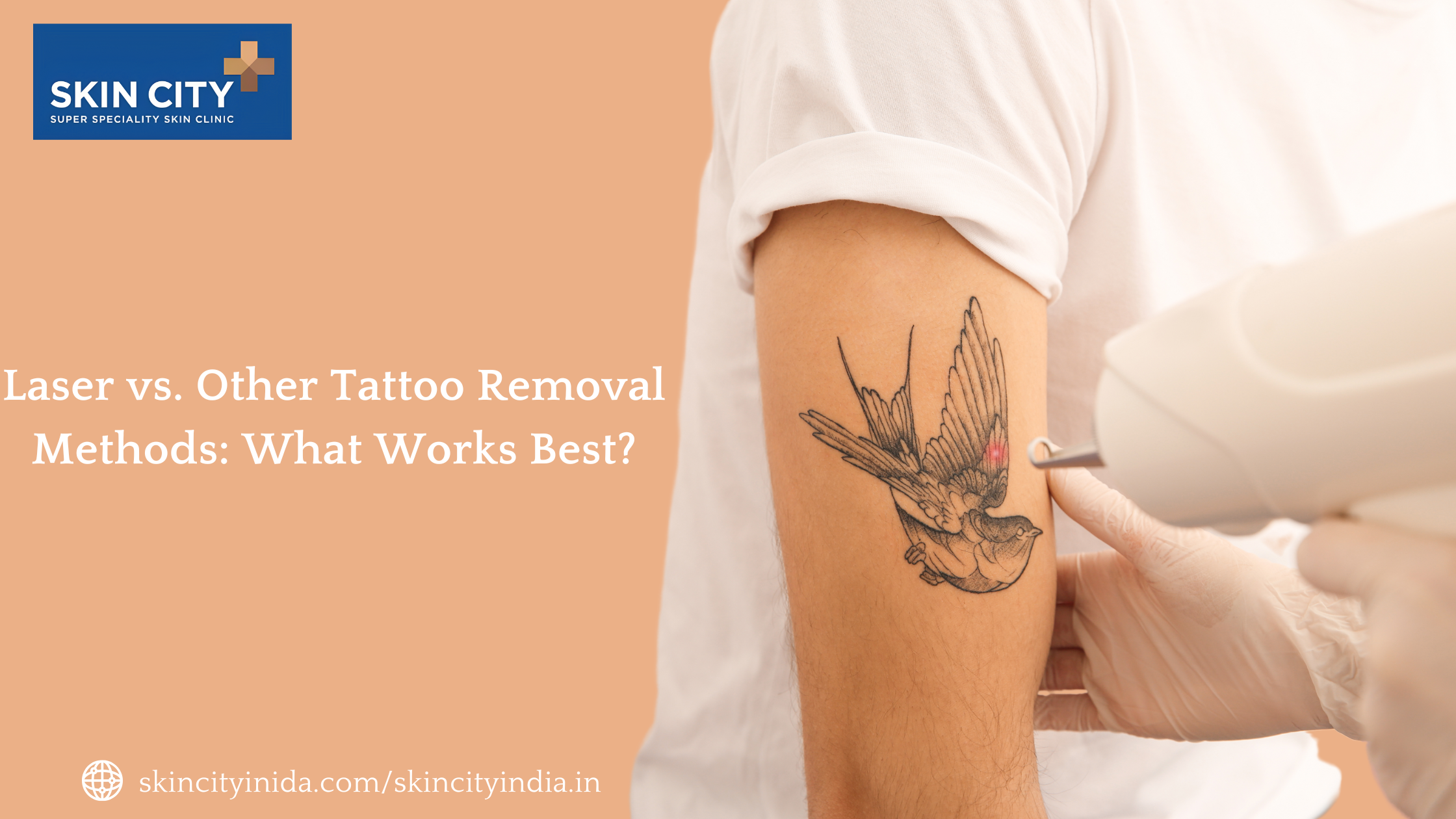
Laser vs. Other Tattoo Removal Methods: What Works Best?
Introduction
Tattoos are a popular
form of self-expression, but sometimes, people regret their ink due to personal,
professional, or aesthetic reasons. Fortunately, various tattoo removal methods are
available today. However, not all techniques provide the same results. The most widely
used and effective method is laser tattoo removal, but alternatives like surgical
excision, dermabrasion, and chemical peels are also available. This blog will compare
laser removal with other methods, helping you make an informed decision about the best
approach for tattoo removal.
1. Laser Tattoo Removal
How It Works:Laser tattoo removal uses high-intensity laser beams to break down
the ink particles in the skin. The body’s immune system then gradually eliminates these
smaller particles, causing the tattoo to fade over time. The process typically requires
multiple sessions, depending on the tattoo’s size, color, and depth.
Pros:
Highly Effective: Works on most ink colors, especially black and dark shades.
Minimal Scarring: Modern laser technology significantly reduces the risk of
scarring.
Precise Targeting: Only affects the tattooed area, preserving the surrounding skin.
Non-Invasive: No surgical cuts or stitches are needed.
Cons:
Multiple Sessions Required: Can take several months for complete removal.
Mild Discomfort: Some patients experience pain, similar to the feeling of snapping a
rubber band against the skin.
Costly: Requires multiple sessions, making it relatively expensive.
2. Surgical Excision
How It Works:
Surgical excision involves physically cutting out the tattooed skin and stitching the
surrounding skin together. It is best for small tattoos, as larger ones may require skin
grafting.
Permanent Results: No need for multiple treatments.
Treatment:
Not Suitable for Large Tattoos: Only small tattoos can be effectively removed with this
method.
Scarring: Leaves a visible scar, as the skin is surgically altered.
Longer Recovery: Healing takes weeks, and stitches require aftercare.
3. Dermabrasion
How It Works:
This method involves "sanding" the skin using a rotating abrasive tool to remove layers
of the tattooed skin. Over time, the body regenerates new skin over the area.
Pros:
Lower Cost: More affordable than laser removal.
Works on Most Tattoo Types: Can remove various colors.
Cons:
Painful: The process can be quite uncomfortable.
Risk of Infection & Scarring: If not done correctly, dermabrasion can lead to permanent
scars.
Variable Results: Some tattoos may not fade completely.
4. Chemical Peels
How It Works:
Acidic solutions, such as trichloroacetic acid (TCA), are applied to the tattooed area
to peel off layers of skin. This gradually removes the ink over several treatments.
Pros:
Less Expensive: Cheaper than laser removal.
Can Be Done at Home: Some chemical peels are available for self-application.
Cons:
Harsh on Skin: Can cause burns, scarring, and hyperpigmentation.
Slow Process: Requires multiple treatments with uncertain results.
Not Effective for Deep Tattoos: Works better for superficial ink rather than deeper
layers.
Final Verdict: Which is the Best Tattoo
Removal Method?
While all tattoo removal methods have their pros and cons, laser tattoo removal remains
the most effective, safe, and widely recommended method. It offers precise removal with
minimal scarring and works on almost all tattoo colors. If you are looking for a
non-invasive, efficient, and scientifically backed tattoo removal option, laser
treatment is the best choice.
If you are considering tattoo removal, consult a professional dermatologist to determine
the best method for your skin type and tattoo characteristics.