
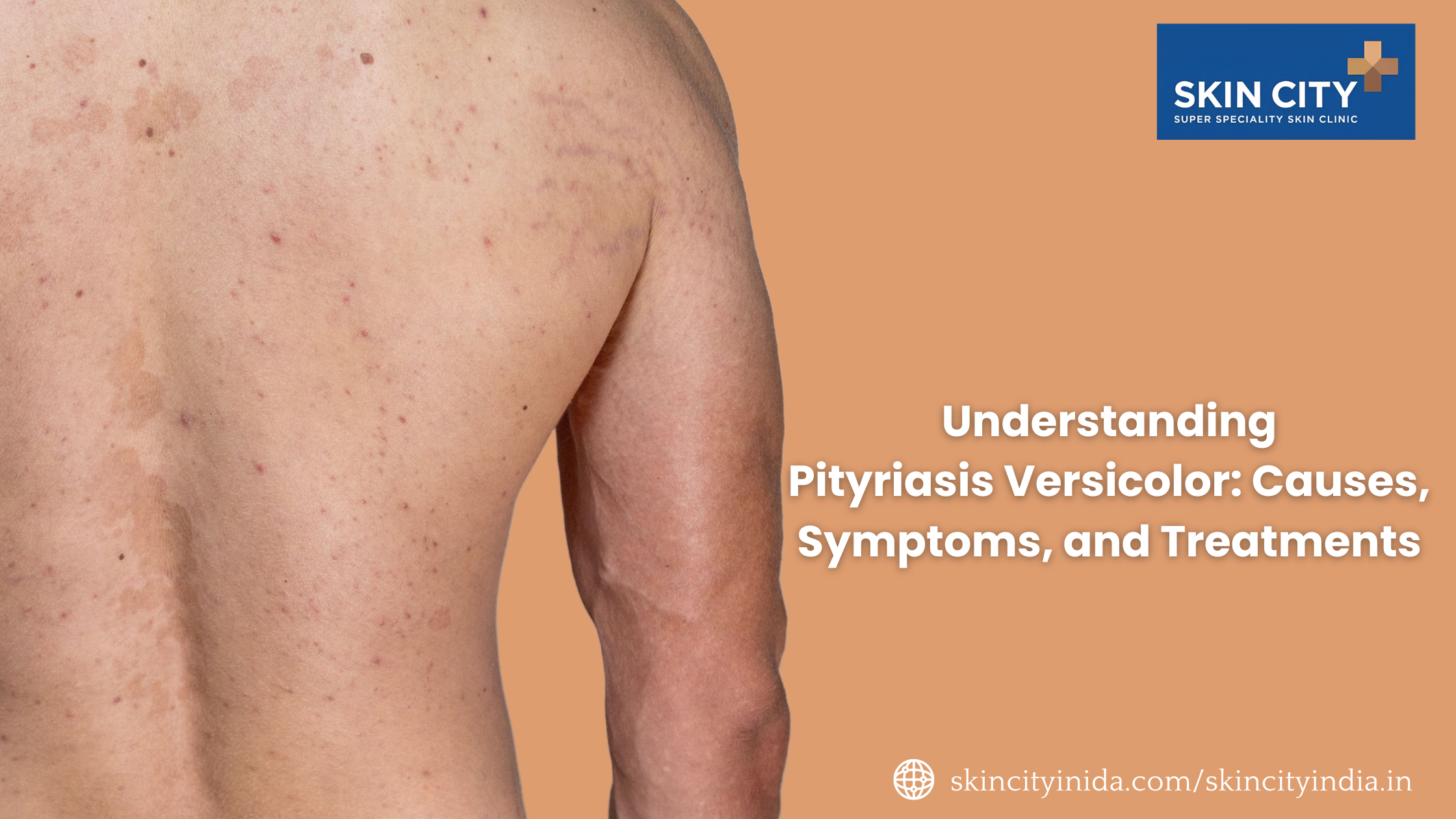
Understanding Pityriasis Versicolor: Causes, Symptoms, and Treatments
Pityriasis Versicolor, also known as tinea versicolor, is a common but often misunderstood fungal infection of the skin. This condition, characterized by discolored patches that appear lighter or darker than the surrounding skin, primarily affects the trunk, shoulders, and other sebaceous gland-rich areas. At Skincityindia, we strive to educate and provide the best care for your skin health. Here’s an in-depth look at Pityriasis Versicolor, its causes, symptoms, and effective treatments.
Causes:
Pityriasis Versicolor is caused by an
overgrowth of yeast from the Malassezia genus, which naturally resides on human skin.
While this yeast is usually harmless, certain factors can trigger its overgrowth,
leading to the development of the condition. Common causes include:
1.Hot and Humid Climate: Warm and humid conditions
create an ideal environment for the yeast to proliferate. People living in tropical
regions are more susceptible to developing Pityriasis Versicolor.
2.Oily Skin:Excessive oil production can promote the
growth of Malassezia yeast. Individuals with naturally oily skin or those using heavy,
oil-based skincare products may be at higher risk.
3.Weakened Immune System: A compromised immune system,
whether due to illness, medications, or underlying health conditions, can make it easier
for the yeast to grow unchecked.
4.Hormonal Changes: Adolescents and young adults often
experience hormonal changes that increase oil production, making them more prone to this
fungal infection.
5.Sweating: Excessive sweating, whether due to physical
activity or environmental factors, can contribute to the development of Pityriasis
Versicolor.
Symptoms:
The primary symptom of Pityriasis Versicolor is
the appearance of discolored patches on the skin. These patches can be:
Light or Dark: The patches may appear lighter
(hypopigmented) or darker (hyperpigmented) than the surrounding skin, varying in color
from white to pink, tan, or brown.
Scaling:
The affected areas often exhibit fine
scaling or flaking, which can become more noticeable when the skin is scratched or
rubbed.
Mild Itching:
Although Pityriasis Versicolor is generally not painful, some individuals may experience
mild itching in the affected areas.
Well-Defined Edges:
The patches typically have
well-defined edges, making them distinguishable from other skin conditions.
Treatments:
Effective treatment of Pityriasis
Versicolor focuses on eliminating the overgrowth of yeast and preventing recurrence. At
Skincityindia, we recommend the following treatment options:
1.Topical Antifungal Treatments: Over-the-counter
antifungal creams, lotions, or shampoos containing active ingredients such as
ketoconazole, clotrimazole, or miconazole can be applied directly to the affected areas.
These treatments are often effective for mild to moderate cases.
2.Oral Antifungal Medications: For more severe or
widespread infections, oral antifungal medications such as fluconazole or itraconazole
may be prescribed. These medications work systemically to eliminate the yeast.
3.Medicated Shampoos: Using medicated shampoos containing
selenium sulfide or zinc pyrithione can help treat and prevent Pityriasis Versicolor,
especially when applied to the body in addition to the scalp.
4.Good Hygiene Practices:Maintaining good personal
hygiene, including regular cleansing and thoroughly drying the skin, can help prevent
the recurrence of fungal infections.
5.Lifestyle Modifications:
Wearing loose-fitting,
breathable clothing, avoiding excessive sweating, and managing stress can also reduce
the risk of developing Pityriasis Versicolor.
Conclusion
Pityriasis Versicolor is a manageable skin condition with proper care and treatment. By
understanding the causes, recognizing the symptoms, and following effective treatment
protocols, you can keep your skin healthy and clear. For personalized advice and expert
treatment options, visit Skincityindia. Our team of dermatologists is dedicated to
helping you achieve optimal skin health and confidence. Don't let fungal infections dim
your radiance—take proactive steps today for healthier skin tomorrow.