
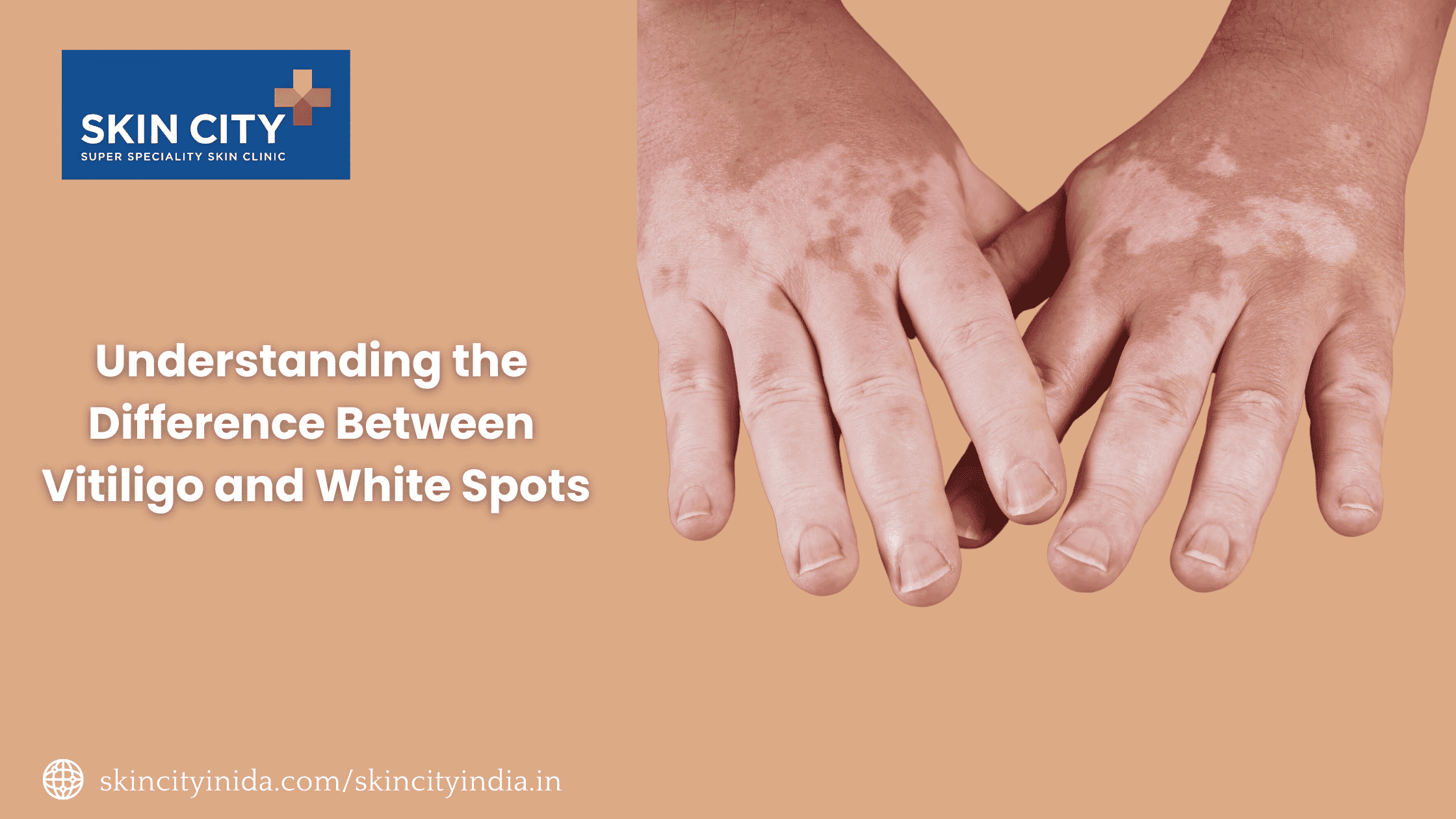
Understanding the difference between vitiligo and white spots
Vitiligo:
Vitiligo involves the loss of
pigment-producing cells (melanites), resulting in depigmented patches or white spots on
the skin.
These patches can appear anywhere on the body and often expand over time, typically with
irregular borders.
While the exact cause is not fully understood, factors like autoimmune responses,
genetic predisposition, and environmental triggers are believed to contribute.
Vitiligo is non-contagious but can have significant emotional and psychological impacts
due to its noticeable appearance.
White Spots (e.g., Tinea Versicolor, Idiopathic Guttate Hypomelanosis):
White spots on the skin may stem from various
conditions, such as fungal infections (Tinea Versicolor), idiopathic guttate
hypomelanosis, or pityriasis alba.
Unlike vitiligo, these spots may not necessarily expand or merge over time. They can
remain stable or even fade with appropriate treatment or lifestyle adjustments.
Causes for white spots can include fungal overgrowth, sun exposure, aging, or genetic
factors.
Treatment approaches vary depending on the underlying cause and may involve antifungal
medications, topical creams, phototherapy, or other dermatological interventions.
In conclusion, while both vitiligo and white spots present as depigmented areas on the skin, they differ in their underlying causes, progression, and treatment strategies. Accurate diagnosis by a dermatologist is crucial for effective management and treatment planning.